
Even standard coins can drift from their nominal meaning.
Denominations of 20 euro cents serve as a primary link within the cash settlement system of the Eurozone.
Production of the first batches started several years before the official currency introduction in 2002.
Most specimens retain a purchasing power of exactly 0.20 €.
Specific categories, however, demonstrate market prices exceeding the face 20 euro cent coin value by dozens or hundreds of times.
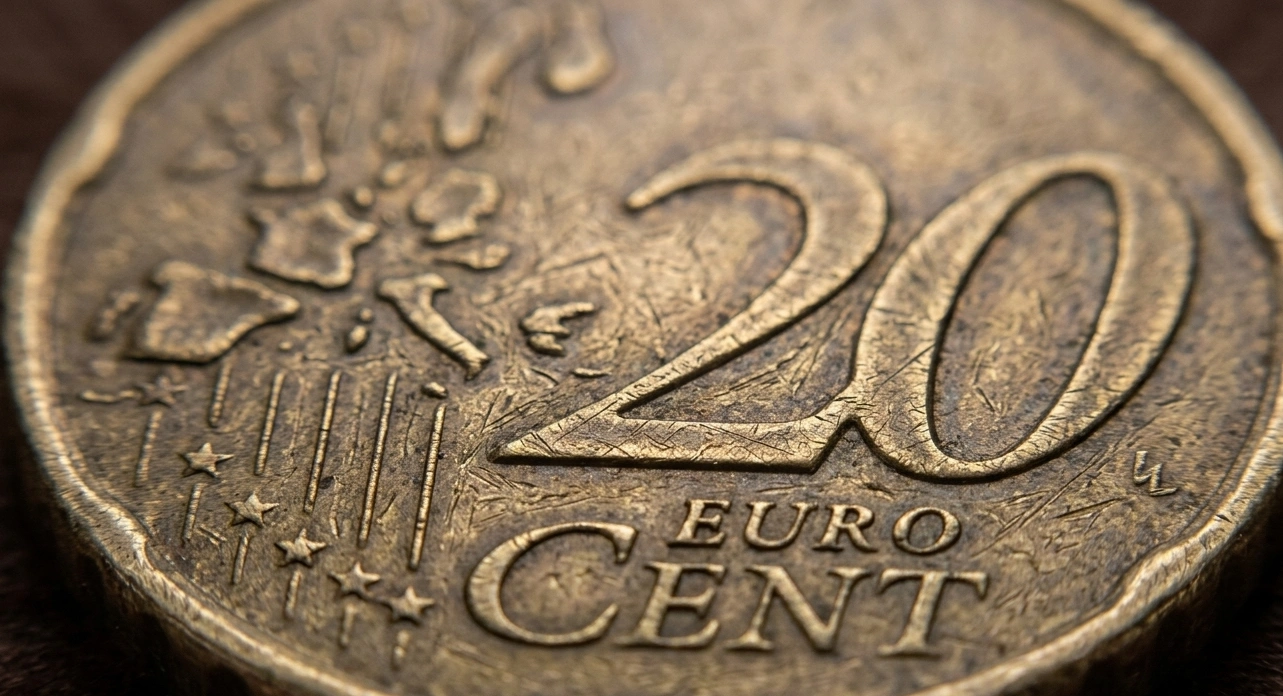
Characteristic | Standard Parameter |
Nominal Value | 0.20 € |
Total Mass | 5.74 grams |
Diameter | 22.25 mm |
Thickness | 2.14 mm |
Material | Nordic Gold |
Edge Shape | Spanish Flower |
Using an alloy called Nordic Gold ensures high wear resistance during long-term circulation.
Strict adherence to the 5.74-gram mass remains a mandatory condition for calibrating banking equipment.
Non-magnetic properties of this metal serve as a primary sign of authenticity.
Mintage Hierarchy by Issuing Countries
Total output volume directly influences availability for collectors.
Largest emitters with their initial mintage figures appear in the list below.
Germany → over 2.8 billion units
France → approximately 1.2 billion units
Italy → roughly 1.4 billion units
Spain → 1.15 billion units
Enormous production volumes in these countries make coins from common years widely available.
Conditions change when considering microstates authorized to mint their own national sides.
The Phenomenon of Microstate Coin Value
Enclave states release coins in extremely limited series.
Large portions of this money never enter actual commercial circulation.
Andorra → Monaco → San Marino → Vatican City.
Price growth dynamics for Vatican coins in Uncirculated condition over the last six years:
2020: 14.50 € ↓ 2022: 19.00 € ↓ 2024: 25.00 € ↓ 2026: 34.00 €
Average annual appreciation for these positions reaches approximately 15.5%.
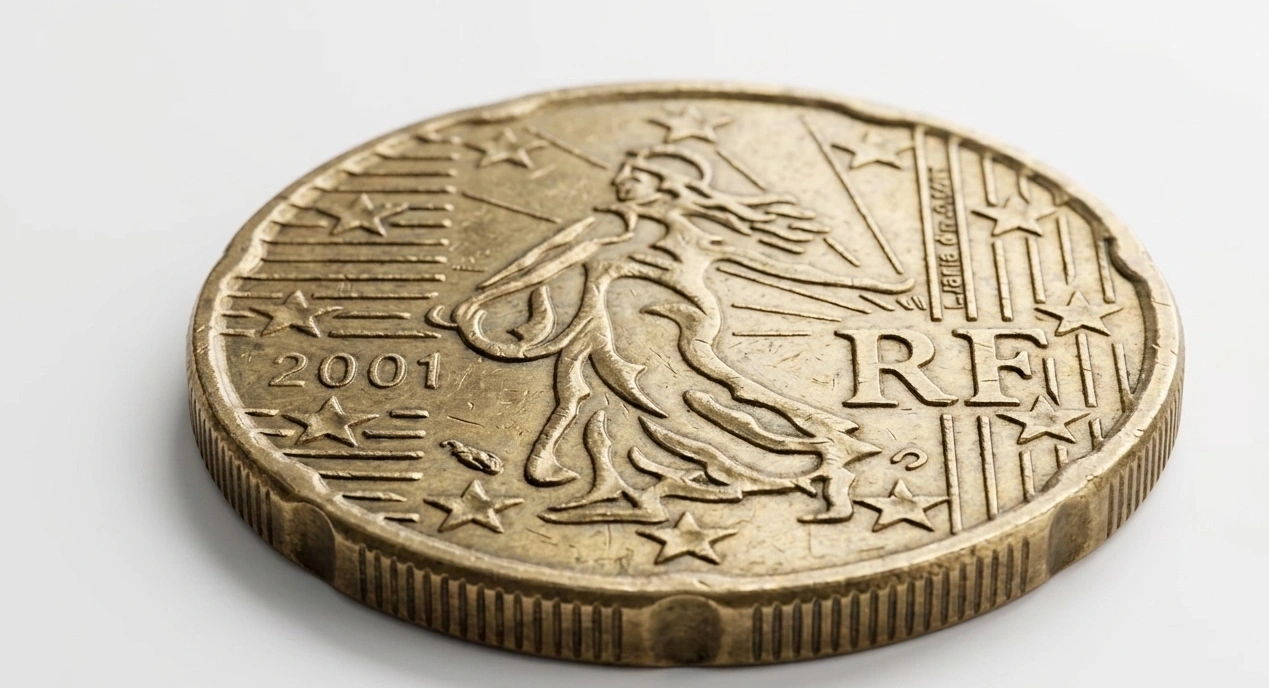
Ordinary French coins from 2002, by comparison, cost exactly 0.20 €.
Classification of Production Defects
Minting errors represent the highest interest for the professional market in 2026.
Defects arise from mechanical failures or die wear.
Planchet Errors
Striking the 20-cent design on metal disks intended for 5 or 10 cents. Market prices in 2026 range from 350.00 € to 550.00 €.
Axis Rotation
Misalignment of obverse and reverse orientation by 180 degrees. Values for such specimens reach 80.00 €.
Metal Excess
Appearance of uneven lumps caused by cracks in the die. Prices vary between 15.00 € and 45.00 €.
Missing Plating
Cases of striking on steel cores without the outer coating. Rarest lots fetch 1,000.00 € at auctions.
Durability and Corrosion Comparison
Nordic Gold material has been tested for resistance to aggressive environments.
Impact Factor | 1-5 Cents (Steel/Copper) | 20 Cents (Alloy) |
90% Humidity | Oxidation after 3 months | Luster lasts 12 months |
Skin Contact | Rapid darkening | Minimal color change |
Friction Wear | Layer wear-off in 5 years | Relief lasts 15 years |
Natural antibacterial properties exist within this specific alloy.
This characteristic remains critical for coins moving through massive public circulation.
Economic Role in 2026
Implementation of the digital euro has reshaped the structure of physical currency circulation.
EU central banks have begun reducing mintage volumes for small change.
Lowered output → Gradual removal of worn specimens → Increased rarity of high-grade coins.
In 2026, 20-cent coins account for 22% of the total volume of metal money.
Functionality within vending machines ensures steady demand for this denomination.
Geographic Specifics: 2002 vs 2007 Design
Numismatic significance depends on the version of the European map on the obverse.
Old Map: EU country borders are clearly separated.
New Map: A unified image of the continent without internal borders.
Transitional periods in 2007–2008 produced hybrid coins.
Using an old obverse die with a new date constitutes a rare error.
Prices for such hybrids in 2026 start from 200.00 €.
Acquiring complete sets of both types remains a standard for professional portfolios.
Auction Statistics and Price Records
Sales of unique specimens are recorded on major European platforms.
Data confirms a stable interest in the error segment.
Lot Description | Grade | Sale Price | Date |
Error (Double Strike) | MS65 | 720.00 € | Jan 2025 |
10-Cent Planchet Error | MS63 | 480.00 € | Mar 2025 |
Vatican (2002 Set) | Proof | 1,150.00 € | Jun 2025 |
Pattern Strike | MS66 | 2,400.00 € | Oct 2025 |
Statistics show a decline in available lots by 8% annually.
This indicates a shift of coins into private long-term investment portfolios.
Professional Appraisal Methodology
Coin value does not represent a fixed figure.
It consists of several variable factors.
Authenticity → Preservation State → Year Rarity → Presence of Defects.
Professional certification from companies like PCGS or NGC confirms the coin's status.
Grading procedures include:
Spectral analysis of the metal composition.
Checking for signs of mechanical cleaning.
Evaluating strike quality on a 70-point scale.
Sealing the item in a plastic holder.
Certification costs for a single coin in 2026 average 32.00 €.
The procedure becomes practical for specimens valued at above 80.00 €. Or 0.00€ with the free coin identifier.
Future of the Denomination Under Digitalization
Forecasts for the cash euro market point to a narrowing segment for circulation coins.
Complete transition of 20-cent coins into the collector asset category is expected by 2030.
Value increases of 20-30% for Brilliant Uncirculated specimens are projected over the next four years.
Physical destruction of old mintages for metal recycling drives this trend.
Copper and Tin prices within the alloy are rising on commodity exchanges.
This creates a "metallic floor" for the coin's value, below which it will not fall.
The "Spanish Flower" Shape and Its Tasks
Specific rim contours serve as a hallmark of the 20 euro cent.
Seven evenly distributed indentations perform technical tasks.
→ Touch identification → Prevention of slipping in coin acceptors → Protection against casting-method counterfeits
Difficulty in reproducing the perfect "Spanish flower" shape deters amateur counterfeiters.
Production costs for an accurate fake exceed the coin's face value fivefold.
Yield Comparison: Coins vs Deposits
Investment attractiveness analysis for rare 20-cent coins during 2020–2026.
Bank Deposit (Average): +18% over 6 years
Stock Index (Conservative): +45% over 6 years
Rare 20 Cents (Monaco/Vatican): +135% over 6 years
The numismatic market demonstrates less dependence on currency exchange volatility.
Steady demand is ensured by a constant influx of new collectors.
Practical Recommendations for Storage
Surface condition determined with the coin finder app directly dictates the final price.
Chemical reactions with plasticizers in ordinary albums can destroy the luster.
Using capsules made of harmless acrylic.
Maintaining indoor humidity at a 40% level.
Excluding direct hand contact with the coin's field.
Oxides on Nordic Gold coins are nearly impossible to remove without damaging the metal structure.
Cleaning coins with chemicals reduces their collective value by 70%.